
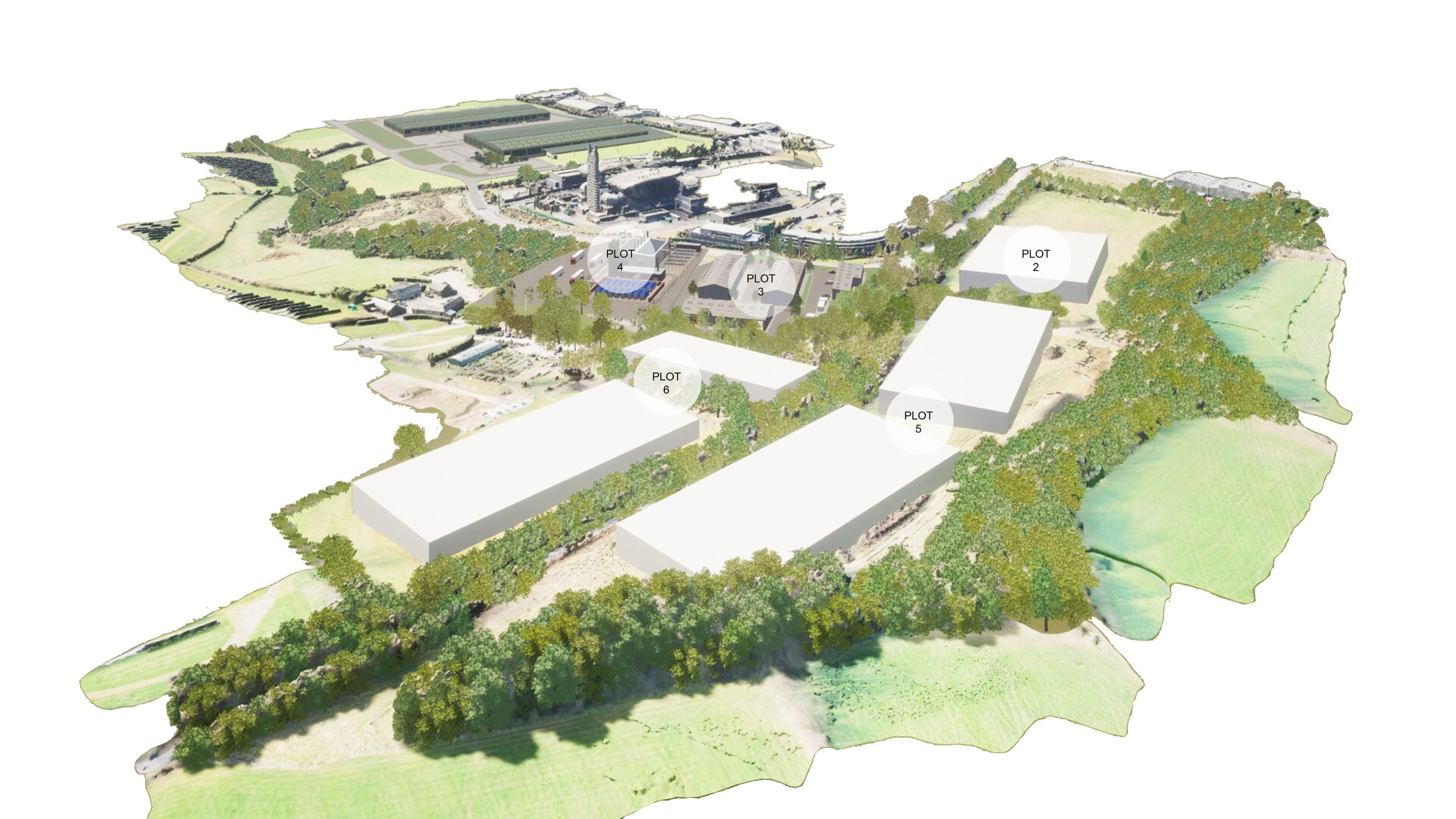
Plymouth and South Devon Freeport partners with the Freeports Hub to map hydrogen potential across Cornwall, Devon and Somerset
Plymouth and South Devon (PASD) Freeport has commissioned a major hydrogen demand assessment covering a 100km radius of its Langage site, revealing a significant and growing appetite for green hydrogen across the region. Demand could potentially reach 65 tonnes per day by 2030 and more than 250 tonnes per day by 2050.
The study, carried out by PA Consulting on behalf of Freeports Hub and published in August 2024, was undertaken in support of Carlton Power‘s Green Hydrogen Project at Langage, one of just 11 projects nationally to secure funding through the Government’s Hydrogen Allocation Round 1 in December 2023. Carlton Power’s 10MW facility represents a significant anchor investment for the region’s emerging low-carbon energy economy.
Eleven sectors identified as hydrogen-ready
Researchers identified eleven distinct end-use segments within the region where hydrogen offers a credible decarbonisation pathway. These span road transport, including heavy goods vehicles, buses and refuse collection vehicles, through to maritime, aviation, industrial and food and drink manufacturing sectors.
Many public transport and logistics operations are already using hydrogen commercially in parts of the UK, while sectors such as food and drink manufacturing, mining, HGVs and aviation are expected to reach commercial maturity in the late 2020s and early 2030s.
Some sectors, including aviation, ferries and naval operations, are likely to require hydrogen derivatives rather than pure hydrogen. This is a distinction that will shape infrastructure planning across the region.
Food and drink manufacturing emerges as early demand leader
The assessment highlights the food and drink manufacturing sector, classified as Fast Moving Consumer Goods (FMCG), as the most significant near-term source of demand, driven by several large producers located across Cornwall. However, their dispersed and often remote locations present a logistical challenge, given the current absence of pipeline infrastructure connecting them to the Langage production site.
In the short term, tube trailer deliveries are expected to be the primary distribution method, with road connections via the A38 towards the M5 identified as a key corridor. The report notes that multi-modal transport hubs and dedicated depot-based refuelling stations could play an important role as volumes grow.
Infrastructure investment identified as critical
Interviewed stakeholders were broadly open to long-term offtake agreements, in line with the UK Government’s 15-year Low Carbon Hydrogen Agreement (LCHA) framework, but identified several conditions that would need to be met first: cost parity with conventional fuels, continuity and scale of supply, health and safety considerations, and supportive government policy on both capital and operational costs.
The Emissions Trading Scheme (ETS) was highlighted by multiple stakeholders as a significant factor. Many of those interviewed said they currently fall just below the ETS threshold but anticipate future policy changes could bring them inside it at which point switching to hydrogen becomes substantially more commercially attractive. Aggregate Industries specifically cited the ETS as a driver for decarbonising its in-scope sites.
The region is ready and the opportunity is clear. The policy needs to follow
The assessment recommends two immediate priorities. The first is direct engagement with the offtakers most likely to switch in the short to medium term, with priority given to those closest to the Langage site who are best placed to receive tube trailer deliveries.
The second is the development of a regional hydrogen policy paper, setting out the interventions needed to create a functioning local hydrogen ecosystem. Key areas identified for the policy paper include access to renewable power and water feedstock, offtaker transition incentives, and solutions to the infrastructure gap created by the absence of industrial clusters in the region.
Modelling suggests there are potentially 21 offtakers locally with the capacity to absorb the entire 10MW output of Carlton Power’s Langage facility in the long term. A finding that points to a compelling commercial opportunity if the right conditions can be established.
A foundation for regional leadership
Speaking about the project, PASD Freeport said the assessment provides vital evidence to inform future investment decisions and policy advocacy, and positions the Plymouth and South Devon region as a serious contender in the UK’s growing green hydrogen economy.
The full demand assessment remains commercially confidential, a condition agreed with participating businesses at the outset of the study.
For further information contact ian.cooper@pasdfreeport.com