
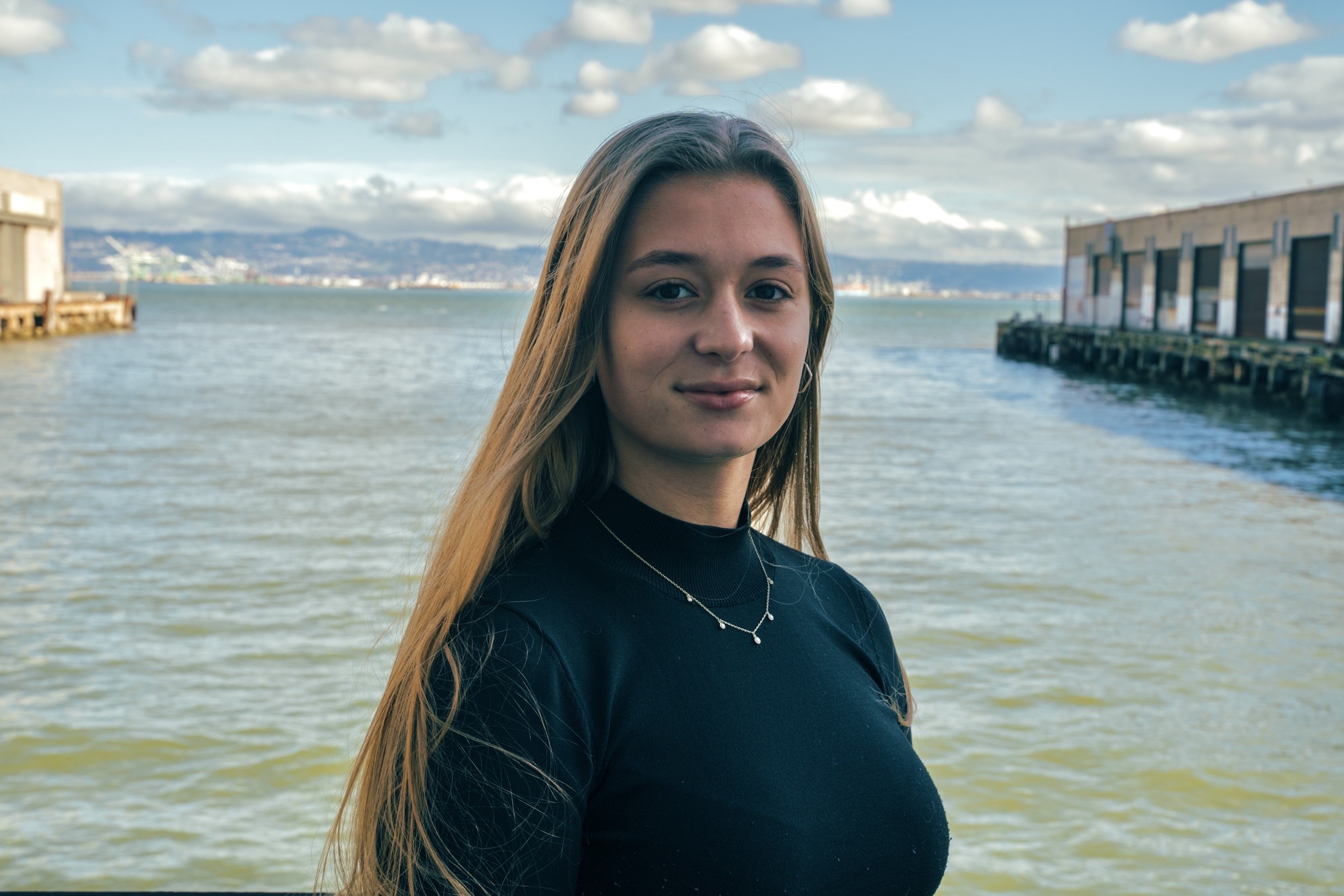
As part of the Plymouth and South Devon Freeport ecosystem, Oshen is carving out a distinctive role in marine data and autonomy. We spoke with Jasmine Eggleton, Commercial Lead, about growth, collaboration, and what the future holds for the region.
Can you start by telling us about Oshen and the role you play within the Freeport ecosystem?
Oshen fills a gap within the passive acoustic and metocean data collection market by offering wide-area persistent monitoring using swarms of micro robots. We are the eyes and ears of the ocean by utilising the C-Star platform, which makes gathering the insights needed for marine operations easier, more efficient, and lower impact.
By improving access to high-quality metocean and acoustic data, we support better decision-making across sectors such as offshore energy, defence, and environmental monitoring.
Over the past three years, Oshen has grown significantly while being based here in Plymouth.
What does impact look like for you locally?
Impact means opening up our specialist knowledge to the wider community and making marine autonomy more visible, understood, and accessible. It’s about sharing what we do, why it matters, and how it contributes to the future of marine innovation.
Being based in Plymouth—Britain’s Ocean City—gives us a unique opportunity to connect with a thriving marine ecosystem. For companies like Oshen, this hub enables collaboration, drives innovation, and strengthens the wider network across South Devon and beyond.
Can you share a tangible example of how your work benefits the region?
Being based in Plymouth, we’re proud that the majority of our workforce is drawn from the local area. As we continue to grow, we’re creating high-value, skilled jobs that directly benefit the regional economy.
We’re also committed to supporting and inspiring the next generation of marine professionals. Through internships and part-time roles, we provide hands-on opportunities for students and young people to gain real-world experience in a fast-growing, high-tech sector.
Wherever possible, we prioritise local suppliers within our supply chain. For example, we work with Plymouth-based composites specialists and machinists to manufacture key components of our robotic systems—helping to sustain and grow local expertise.
In addition, we collaborate with other regional Uncrewed Surface Vehicle (USV) companies to help shape forward-looking legislation around marine autonomy. By working together, we’re strengthening the regional ecosystem, enabling sustainable industry growth, and positioning the South West as a leading hub for this emerging technology.
How does being part of the Freeport change what’s possible for Oshen?
It allows us to test our equipment locally, which reduces both costs and time, while also streamlining approval processes.
Just as importantly, it places us within a concentrated network of marine and autonomy organisations. Having collaborators, partners, and innovators on our doorstep makes it much easier to share knowledge and tackle industry challenges together—we’re not going to solve the marine data gap in isolation.
The ecosystem also creates real opportunities to bring people together. We can host events and know that the right mix of industry, academia, and stakeholders will be in the room, helping to build stronger relationships, accelerate innovation, and support sustainable business growth.
Who are you most excited to work with as the region grows?
There is a strong pipeline of talent coming out of local universities, especially engineers and marine scientists, as well as those at the early stages of their careers in industry. This emerging talent is vital for driving innovation and shaping the future of marine technology.
We’re also keen to collaborate with businesses across Devon and Cornwall that can support our growth—particularly in areas like manufacturing and marketing. Building these regional partnerships not only strengthens our own capabilities but also contributes to a more connected, resilient marine and technology ecosystem in the South West.
How are you contributing to skills and workforce development?
At the earliest level, we offer work experience placements for young people aged 10 to 17, giving them early exposure to careers in marine technology and engineering. We actively ensure these opportunities are varied and engaging, helping to spark interest and confidence from a young age.
From age 17 onwards, we provide paid internships and part-time roles across both our engineering and production teams. These positions are highly sought-after and competitive, and we prioritise advertising them locally to ensure opportunities are accessible to people in the region.
Looking to the future, we are exploring opportunities to secure funding for more formal training and workforce development programmes. We are particularly interested in collaborating with institutions such as the University of Plymouth to create structured pathways into the sector and further strengthen the local talent ecosystem.
What does meaningful collaboration look like in practice?
For us, meaningful collaboration is about combining complementary expertise to solve challenges that no single organisation can tackle alone. Oshen’s mission—to close the marine data gap—simply isn’t achievable in isolation.
In practice, this means working closely with marine sensor manufacturers to integrate their specialist technologies onto more accessible, scalable platforms, ensuring data can be gathered more effectively.
Collaboration also enables us to take on larger, more ambitious projects. A great example is the UK Defence Innovation project, where Oshen partnered with Marine AI and ZeroUSV to develop an autonomous underwater network. By bringing together different capabilities, we were able to deliver something far more impactful than any one company could achieve independently.
What’s a common misconception about your sector?
A common misconception about the marine autonomy sector is that it’s all about replacing people with robots.
In reality, marine autonomy is far more about augmenting human capability than removing it to improve safety. C-Stars have the capabilities to collect data no human could ever collect, like within a hurricane. This saves lives with better offshore and onshore forecasts. We are creating a whole new market, not replacing any human activities.
Another misconception is that the technology is futuristic or not yet practical. In fact, autonomous vessels and systems are already being deployed today across defence, environmental monitoring, offshore energy, and research. Oshen C-Stars have already covered over 4000+ miles individually and completed missions over 200 days. The challenge isn’t whether it works—it’s scaling adoption, improving regulation, and integrating it into existing operations.
Looking ahead, what does success for the region look like to you?
Looking ahead 5–10 years, success for the PASD Freeport region would mean seeing Plymouth and the wider South West firmly established as a globally recognised hub for marine autonomy and ocean technology.
Professionally, I’d want to see companies like Oshen scaling successfully from the region—creating high-quality jobs, attracting investment, and delivering world-leading solutions from right here in Plymouth. It would also mean a more mature ecosystem, where collaboration between industry, academia, and government is seamless and consistently driving innovation.
On a personal level, as someone who lives in Devon, success is about building a place where people don’t feel they have to leave to pursue ambitious careers. Instead, they can stay, grow, and be part of something cutting-edge, all while enjoying the lifestyle the South West offers.
Finally, what should people understand about the South West that they won’t find in a brochure?
It’s all about the people. There’s a genuine sense of openness and willingness to support one another that you don’t often find captured in brochures.
We work with multiple other companies to deploy our C-Stars and help recover them. There’s a hardworking group of great people experienced in this field who want to keep Plymouth’s position as the best place in the country for marine autonomy, and grow the successful businesses here.
What truly sets the South West apart is the strength of its connected ecosystem—spanning industry, academia, and wider networks. It creates an environment where partnerships form easily, innovation is accelerated, and people are genuinely invested in each other’s success.
As Oshen continues to grow from its base in Plymouth, its work reflects what the Freeport is designed to enable: innovation that is practical, collaborative, and rooted in place, discover more conversations with the businesses shaping the Plymouth and South Devon Freeport in our spotlight series.
To find out more about Oshen: https://www.oshendata.com/