
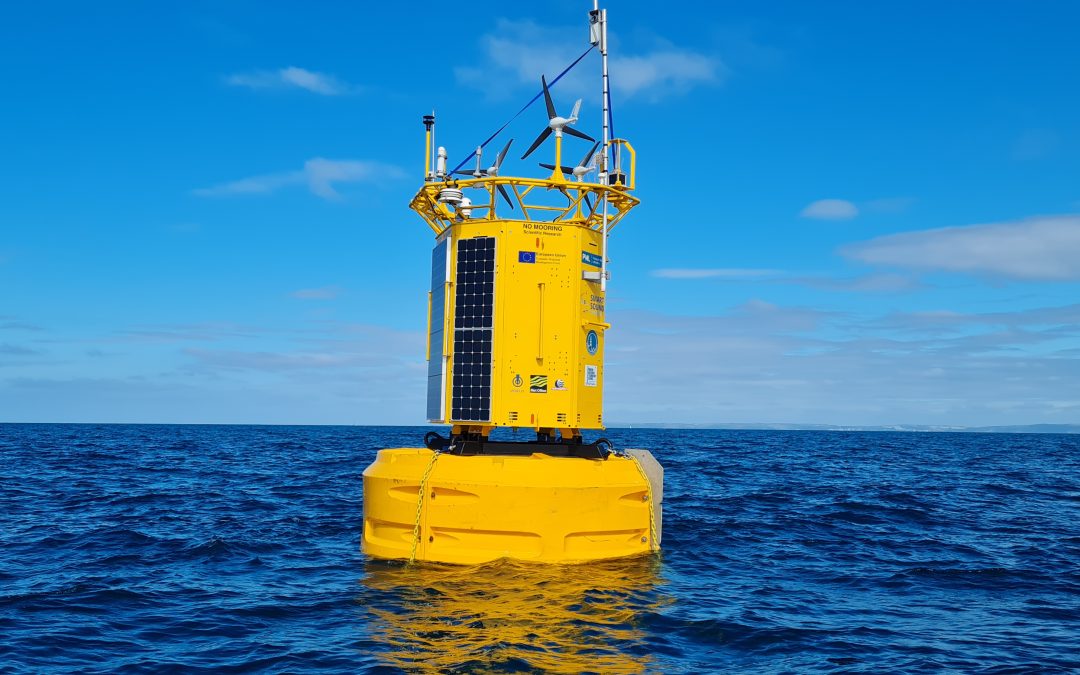
The next few years will see marine autonomy and the technologies associated with it move fully from emerging to being squarely in the mainstream. Defence is currently leading the way and civil applications will inevitably follow. Just recently the First Sea Lord marked his first year in office by setting out again how the Royal Navy is transforming its operations to embrace the concept of a fleet of crewed, uncrewed and autonomous platforms. The Navy’s approach also demonstrates how such technology has wide ranging impact on broader issues such as styles of leadership, skillsets, tactical and strategic approaches.
At the heart of this transformation is the technology, rapidly advancing on an almost daily basis. So it is an enormous privilege that Plymouth and South Devon Freeport is part of the UK’s National Centre for Marine Autonomy (NCMA); a designation recognising the incredible expertise, facilities, research organisations and businesses in the wider Plymouth area who have been pioneering marine autonomy for years.
This is an opportunity for a genuine comparative advantage for the UK and Plymouth will be central to that proposition, enabled by significant investment such as the recently announced £50 million Defence Growth Deal and the up to £20 million Local Innovation Partnerships Funding from Innovate UK. Whilst Plymouth will help lead development of the technology, the area will act as a hub to connect other regions and share knowledge and enable collaboration across the country and internationally.
To help realise this potential the Freeport, Plymouth City Council and the Ministry for Housing, Communities and Local Government partners commissioned independent research by WSP and Cybora Consulting which sets out both the scale of the opportunity and what it will take to realise it. This article draws on a digest of that research published in the NCMA brochure by Sam Boyd Williams (WSP) and Chris Booroff (Cybora Consulting) National Centre for Marine Autonomy
Where Marine Autonomy is Already Delivering
Within the defence sector remotely operated assets are enabling mass alongside safer surveillance and logistics in high-risk environments, such as envisaged in Atlantic Bastion, and many of those technologies translate directly into civilian use, for example underpinning floating offshore wind projects and ocean monitoring programmes.
Data capture is a particularly strong use case where persistent monitoring in harsh conditions in remote areas becomes more feasible. As such the technology helps enable aquaculture, seabed energy extraction, environmental research; the applications span the full breadth of the blue economy. And as noted by the First Sea Lord, this is not only pure autonomy but combinations of crewed, uncrewed and fully autonomous vessels matched to sensors and aerial assets.
What Needs to Come Together
The WSP and Cybora research points to eight conditions that will determine how quickly the UK can lead sustainably:
- Regulatory leadership. The Maritime and Coastguard Agency needs the resources and flexibility to shape forward-thinking frameworks that evolve alongside advances in marine autonomy.
- Regulatory collaboration. Building on recent progress between industry and regulators, new frameworks and flexible approval pathways must ensure that regulation keeps pace with innovation.
- Accessible funding. Clearer investment pathways from research to commercialisation, particularly for SMEs, will attract capital, nurture entrepreneurship and scale successful innovations.
- Strategic international partnerships. Connecting industry, academia, government and end-users, while learning from global best practice, will accelerate adoption and open doors to international markets.
- World-class testing infrastructure. A connected network of advanced testbeds — including deep-sea facilities supported by digital twins, will allow innovators to demonstrate performance and build confidence among investors and regulators.
- Physical and transport infrastructure. Proactive planning for the workspaces, transport links and housing needed to support a growing sector will attract businesses, talent and investment.
- Skills aligned to sector needs. Working with educational institutions to develop training and degree programmes in digital, engineering and sustainability will secure the long-term workforce the industry depends on.
- Strategic direction. An industry-neutral body setting clear technology priorities, supporting SMEs and streamlining procurement will help the UK supply chain move faster and stay competitive.
Our Region’s Role
Plymouth’s strengths in marine autonomy grew from the ground up; maritime heritage, engineering expertise, world-class testing waters and thriving clusters of specialist businesses. The Freeport adds further momentum enabling scaling and providing tax and customs reliefs. The NCMA designation brings both investment and responsibility. The economic potential is substantial, with significant gross value added and high-quality jobs on the horizon. Partners in the Plymouth area are now working closely together to maximise the potential of this opportunity, supported by the investment NCMA designation is helping to draw in. Recent experience at Oceanology showed the message is already reaching other countries and international collaboration and investment will follow in the coming years.
It’s not guaranteed, but with hard work the future is looking very bright indeed.