
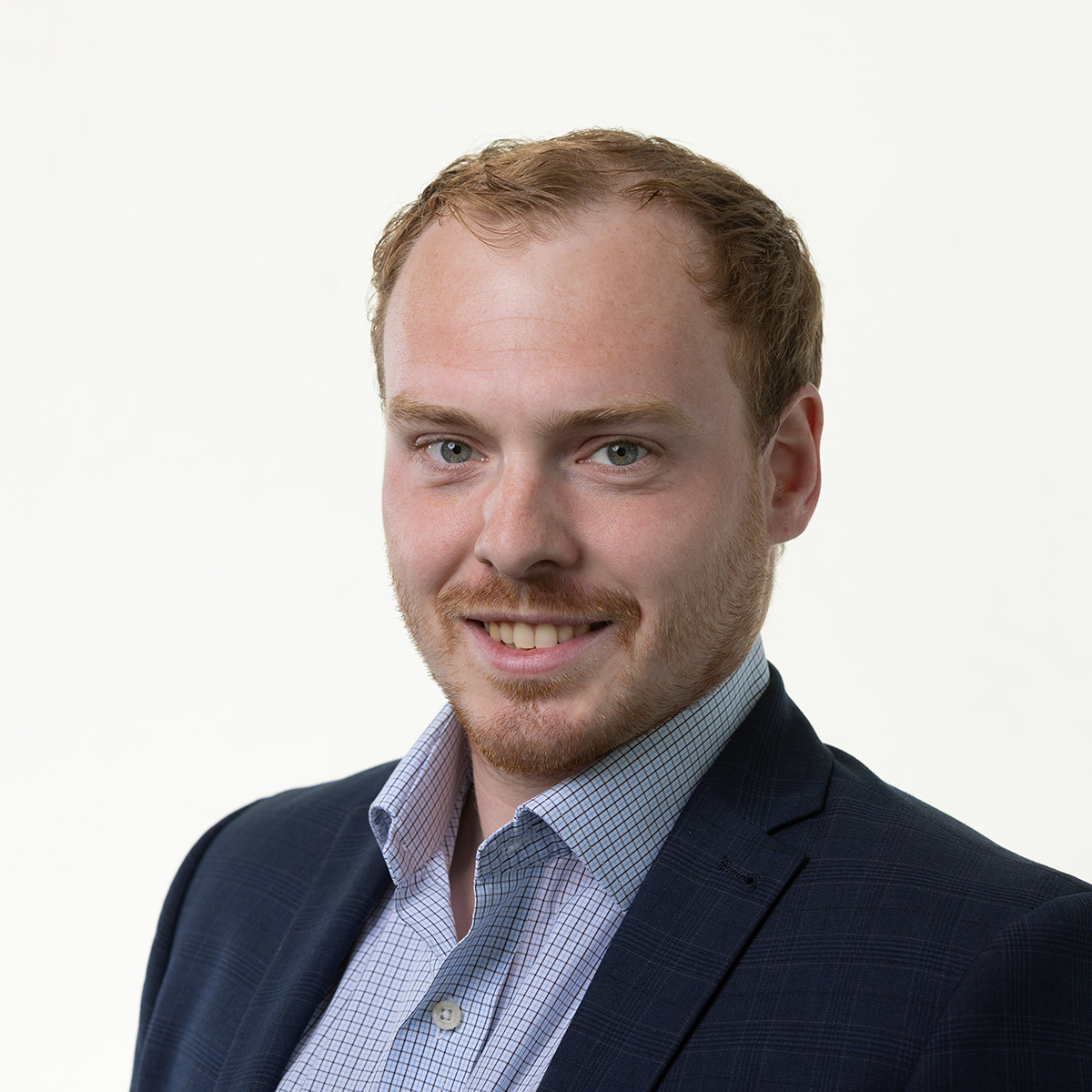
As part of the Plymouth and South Devon Freeport ecosystem, PML Applications is helping innovative marine businesses test, validate and scale their technologies in the water off Plymouth. We spoke with Sam Fawcett, Manager of the Centre for Coastal Technologies at PML Applications and Head of Commercial at Smart Sound Plymouth, about de-risking innovation, building local capability, and what the future holds for the region.
Can you start by telling us about PML Applications and the role you play within the Freeport ecosystem?
PML Applications is the commercial arm of Plymouth Marine Laboratory, where we combine world-class marine science with practical, real-world technology deployment. Within the Freeport ecosystem, our role is to be the gateway to the sea, helping innovative businesses, from start-ups to major defence primes, test, validate and scale their marine and coastal technologies here in Plymouth.
The problem we’re here to solve is one of access and de-risking. Getting a novel marine technology from lab to ocean is expensive and complex. We remove those barriers by providing authorised water space through Smart Sound Plymouth and experienced marine operations teams, all backed by the scientific expertise of PML. Smart Sound Plymouth is a PML-led marine autonomy and ocean technology testing facility, supported by PML Applications and the project’s partners. The Freeport creates the economic conditions that make it viable for those businesses to come and do that work here in Plymouth and South Devon.
What does impact look like for you locally?
Impact, for me, is evident in technologies deployed and businesses that choose Plymouth as their base for growth. Locally, that means seeing the marine autonomy and blue economy sector flourish here, bringing high-skilled, well-paid roles to the city and the wider region. It means our graduates from Plymouth’s universities choosing to stay and build careers in a globally significant marine technology cluster, rather than feeling they have to leave for London or elsewhere.
More broadly, success looks like international recognition for Plymouth and South Devon as the place to come if you want to develop and test marine technology, which I’m already seeing happen. When companies from across the UK and beyond choose Smart Sound Plymouth as the place to trial their technology, that economic activity, that expertise, and those relationships stay here.
Can you share a tangible example of how your work benefits the region?
We recently supported an AUV sea trial using Plymouth Quest, our research vessel. The client needed to move from a tested prototype to proven performance in real sea conditions, and that required far more than just access to a stretch of water. It meant detailed pre-trial planning, vessel scheduling, safe launch and recovery, and an experienced crew who could adapt when conditions or the technology didn’t behave exactly as planned.
What made the difference, by the client’s own account, was our team’s approach from the first planning conversation right through to time at sea. For a small or growing company, a delayed or failed sea trial can set a product back months and carry significant cost implications. Having a local, experienced deployment team that understands both the technology and the marine environment meant this client de-risked their trial, hit their timeline, and came away with validated data they could take straight to their investors.
It’s a good illustration of the true local value of building a team here. Plymouth has the water space and the infrastructure, but it’s the people and operational know-how that transform a trial into a successful outcome. When that expertise stays here and gets reinforced with every project, it increasingly draws other companies to test in Plymouth rather than elsewhere in the UK.
How does being part of the Freeport change what’s possible for PML Applications?
Being part of the PASD Freeport ecosystem makes it easy for us to make the case for Plymouth to potential clients and investors. The Freeport designation signals to the rest of the world that this region is serious about growth and innovation, and that there are tangible incentives, infrastructure investments, and strategic intent behind it.
For PML Applications and Smart Sound Plymouth, it amplifies what we can offer. We already have the authorised water space, the vessels, the expertise, and the science, but the Freeport adds the economic architecture around that to attract the companies, the capital, and the talent that will scale up our capabilities. It also creates a more natural alignment between organisations across the ecosystem, so conversations about collaboration happen more readily and more productively than they might elsewhere.
Who are you most excited to work with as the region grows?
I’m most excited about working with technology developers in the marine autonomy and uncrewed systems space, companies building the next generation of autonomous surface vessels, subsea vehicles, sensor payloads and data platforms. That’s where there’s enormous growth happening right now, driven by both defence investment and the offshore energy transition.
And on the talent side, I’m excited by the emerging generation of marine engineers, ocean scientists and tech entrepreneurs coming through Plymouth’s universities who want to build things that matter for the planet.
How are you contributing to skills and workforce development?
We invest in this in several ways. Working alongside Plymouth Marine Laboratory, we provide real-world experience for early-career researchers and scientists, giving them hands-on exposure to commercial marine operations that you simply can’t get from a textbook or a lab.
More practically, when we bring companies to Plymouth to conduct trials, they often need local subcontractors, crew, technicians, and specialists, so we actively connect them with the regional skills base. Every project is an opportunity to build capability in the local workforce.
What does meaningful collaboration look like in practice?
Real collaboration means solving a problem together that neither party could solve alone, and being honest about what each brings to the table. In practice for us, that means sitting down with a technology developer and taking the time to understand what stage they’re at, what their risk tolerance is, and what a successful trial looks like for them, rather than offering a standard service package.
It also means being transparent when a client’s need is better met by a partner organisation than by us. Within the Freeport ecosystem, the ambition is to build trust where open, honest collaboration is the default, because that’s what produces the best outcomes for the region.
What’s a common misconception about your sector?
The biggest misconception about marine technology is that it’s niche or somehow separate from the mainstream economy. Marine autonomy, ocean data, and coastal infrastructure are foundational to the energy transition, national security, climate monitoring, and the supply chains that keep the global economy moving. Plymouth is at the centre of something that matters enormously.
Looking ahead, what does success for the region look like to you?
Success for me would be Plymouth and South Devon being unambiguously recognised as the UK’s home of marine and coastal technology, a place where the world comes to develop, test, and deploy the next generation of ocean solutions. I’d want to see a thriving ecosystem of companies here, ranging from ambitious start-ups to established global players, all benefiting from the unique combination of authorised water space, scientific expertise, and collaborative culture that we’re building.
Personally, I’d find it deeply rewarding to look back and know that PML Applications and Smart Sound Plymouth played a meaningful role in making that happen, that we were the organisation that helped hundreds of technology companies get their innovations into the water and onto the market, and that the economic and environmental benefits of that work rippled through this region for decades.
Finally, what should people understand about the South West that they won’t find in a brochure?
What you won’t find in a brochure is the genuine warmth and collaborative spirit of this community. There’s an openness here that I’ve not encountered anywhere else, where organisations that might be competitors in other contexts actively want each other to succeed.
The concentration of marine expertise within a relatively small geographic area means you can have an informal conversation at a networking event on a Tuesday that leads to a collaboration proposal by Friday. And the relationship between the research community, the commercial sector, the council, and the Freeport is genuinely close; people are pulling in the same direction. If you’re serious about marine technology, ocean sustainability, or the blue economy, there is nowhere better in the UK to be right now than the South West.
As PML Applications continues to grow from its base in Plymouth, its work reflects what the Freeport is designed to enable: innovation that is practical, collaborative, and rooted in place, discovering more conversations with the businesses shaping the Plymouth and South Devon Freeport in our spotlight series.
To find out more about PML Applications: https://pml-applications.co.uk/